 ANA REPORTER
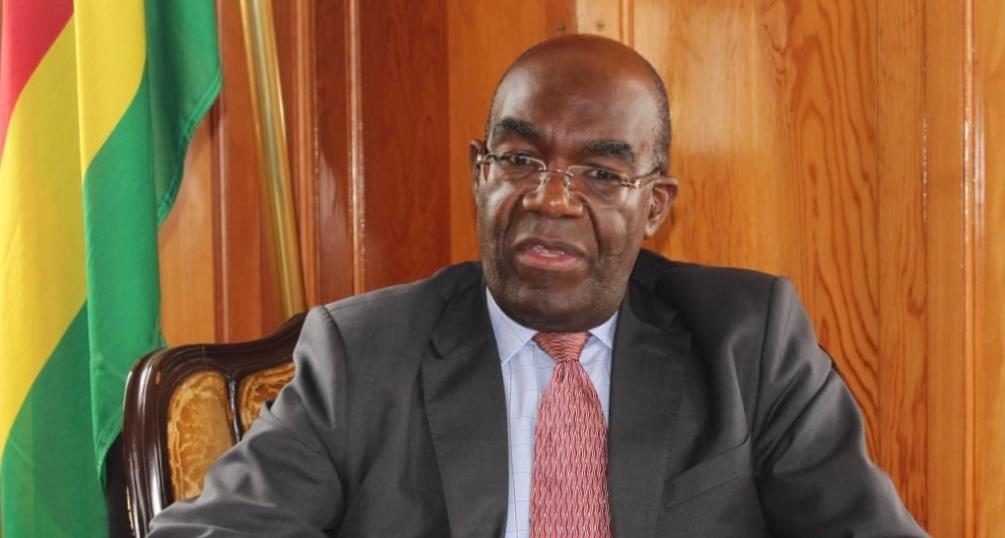
PRETORIA – The government of Zimbabwe, through its embassy in Pretoria, strives to constantly engage its multitude of citizenry based in South Africa but the process is hampered by the deep polarisation among the Zimbabweans, Ambassador David Hamadziripi said on Monday.
“Talking to my colleagues, Zimbabwean compatriots who are in the diaspora, I want to debunk this idea that the Zimbabwe government does not seek to engage its diaspora. Let me throw the ball back to you. In South Africa we have a huge diverse Zimbabwean diaspora which is not united. How do we work with you as an embassy? We have said we are ready to work with you,” Hamadziripi told a symposium on Zimbabwe hosted by the department of international relations and cooperation (Dirco) in Pretoria.
“We are ready to engage. We are ready to create the opportunity for you to work with the not just the government, but to work with all compatriots back home in a constructive manner. If you are not organised, not united, we cannot talk to you individually. There are many of you. As the embassy we are open.”
Hamadziripi said for the ongoing “re-engagement policy”, aimed at building bridges with the global community, Zimbabwe requires the blessing and support of South Africa.
“One of the practical ways in terms of the support given to Zimbabwe, you know we are pursuing a re-engagement policy with the international financial institutions and the international community. We certainly need a stronger voice from SADC and also from South Africa as we engage these big institutions so that our viewpoints can also be taken aboard,” said Zimbabwe’s envoy.
Hamadziripi said the most evident effect of the sanctions imposed on Zimbabwe was the denial of financial resources and credit facilities by global institutions.
“We think that one way SADC can help is to create facilities for Zimbabwe to be able to trade, to access financial resources at reasonable, affordable rates,” he said.
Outspoken Zimbabwean academic and former deputy prime minister Professor Arthur Mutambara said Zimbabwe needed assistance in effecting electoral reform and deepening democracy.
“The fundamental problem in Zimbabwe is the issue around the management of our elections. Help us help ourselves so that when we go to the elections, we have transparent, credible, and fair elections. The winners of the elections should be duly congratulated by the losers. As you dialogue and talk all you want, fundamentally, help us with management of our elections,” said Mutambara.
“We have had this problem in 2002, in 2008, in 2013 to a lesser extent, in 2018 it was major. Right now when our Presidency Emerson Mnangagwa is addressing Parliament the opposition walks out. Even worse, chairman of the public accounts committee Tendai Biti is chairing a committee, the ruling party [Zanu PF] members of parliament walk out. Let us find solutions around the management of elections.”
Mutambara said the sanctions imposed on Zimbabwe should be removed, but that was not the panacea for the current crisis.
“Yes, the sanctions must go. We do not feel that the sanctions are serving any purpose. However, they are just a symptom. Why where they put in place? The Americans and the Europeans should not have put sanctions on Zimbabwe but they are reasons they give. Are we doing anything about the reasons being proffered by those who imposed sanctions on us? Let us preempt them by solving those matters, said Mutambara.
“Sanctions have two forms. There are sanctions imposed upon you by foreigners, and there are sanctions you impose on yourself … corruption, misgovernance and so forth. Why don’t we as Zimbabweans solve those things we control while we advocate with SADC and Africa for the other sanctions to be removed? Charity begins at home.”
International Relations Minister Naledi Pandor told the gathering that Pretoria strongly believes that Zimbabwe’s challenges can be fixed by the country’s citizens, aided by friendly neighbours like South Africa.
Panelists at the event included Unisa’s Vice Chancellor and Principal Mandla Makhanya, Unisa’s Somadoda Fikeni, Philani Mthembu of the Institute for Global Dialogue and Shingirirai Mutanga of the Africa Institute of South Africa.