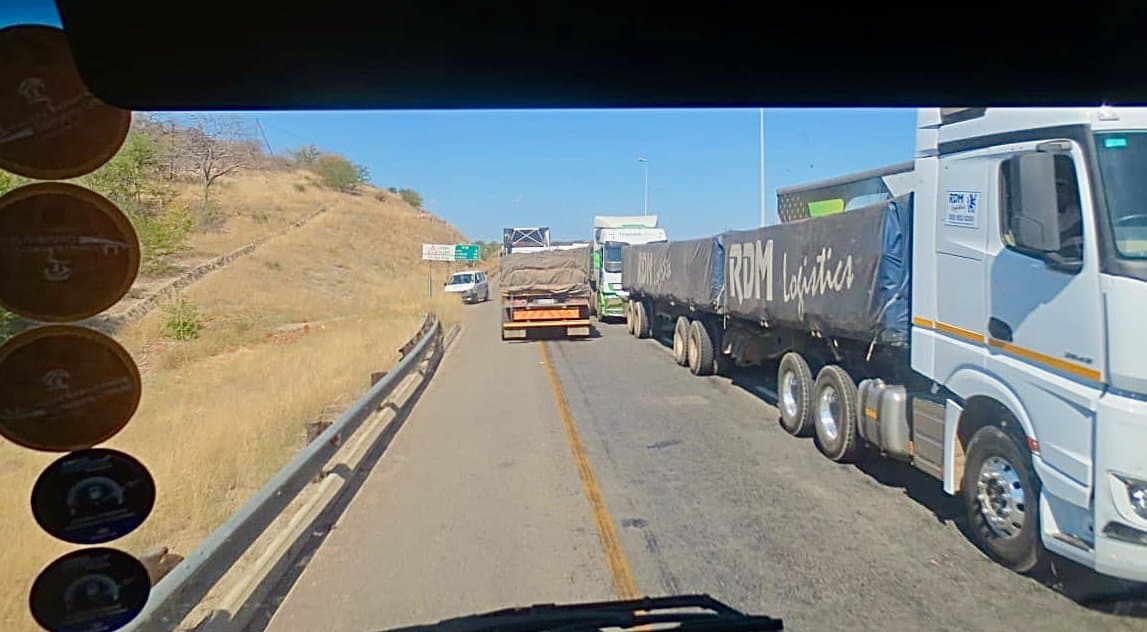
Rising fuel costs in Zimbabwe are driving long-distance truck drivers to refuel across the border in South Africa, placing increased pressure on supplies in the northern town of Musina.
Transport operators say it has become significantly more economical to fill tanks in South Africa and carry additional fuel, rather than purchasing it locally where prices have climbed sharply in recent months.
One truck driver, who requested anonymity, said he routinely adjusts his refuelling strategy due to the cost difference. He explained that although he was travelling to Zambia, he could not afford to fill up in Zimbabwe, choosing instead to refuel in South Africa and transport extra fuel for the journey.
The impact of this shift is being felt at filling stations in Musina, where demand has surged. Some service stations have reportedly struggled to maintain supply, with attendants indicating that priority is being given to vehicles registered in South Africa.
At one station, an attendant told motorists that fuel was being reserved for South African vehicles and advised others to return at a later date.
Although fuel remains cheaper in South Africa compared to Zimbabwe, prices there have also risen slightly in recent weeks. Analysts attribute this to global supply pressures, including geopolitical tensions affecting oil markets.
The effects are also extending beyond formal supply chains. Informal fuel traders operating near the border say their access to supply has become less predictable as demand increases.
Inside Zimbabwe, higher official pump prices have pushed more consumers towards informal vendors, where prices can be more flexible despite concerns about quality and regulation.
Experts warn that sustained price disparities between neighbouring countries could continue to distort regional fuel flows. The growing cross-border demand is placing additional strain on infrastructure in border towns and raising questions about the long-term stability of fuel distribution systems in southern Africa.
Authorities have not yet announced any specific measures to address the situation, but industry observers say coordinated regional responses may be required if the trend persists.