Sweden will maintain diplomatic and development ties with Zimbabwe despite plans to close its embassy in Harare and phase out bilateral development assistance, outgoing Swedish Ambassador Per Lindgärde said.
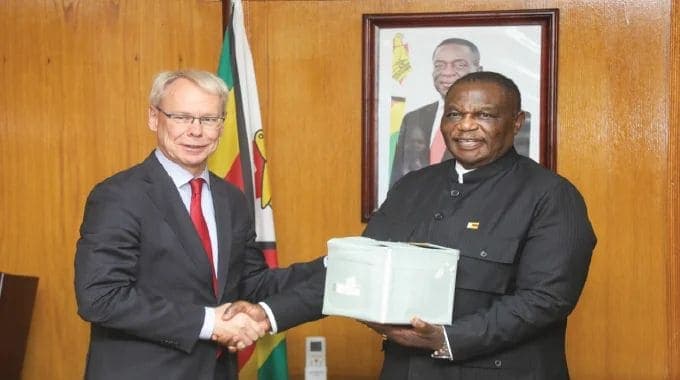
Lindgärde made the remarks after a farewell courtesy call on Zimbabwe's Vice President Constantino Chiwenga in Harare on Friday.
He said Sweden would continue supporting Zimbabwe through regional and thematic programmes, even as its bilateral development cooperation strategy comes to an end.
“We are phasing out our bilateral development strategy. But there will be other streams of support coming to Zimbabwe from regional strategies, from thematic strategies,” Lindgärde said.
The ambassador said some assistance would continue through civil society organisations, while cooperation between government institutions would remain in place.
Public health is among the areas expected to benefit from continued collaboration.
Lindgärde said the Swedish Public Health Agency was preparing to sign a memorandum of understanding with Zimbabwe's Ministry of Health to strengthen institutional cooperation.
“So that cooperation will continue,” he said.
Sweden has previously indicated that assistance channelled through multilateral organisations and the European Union would not be affected by the embassy's closure.
Swedish authorities have also pledged to continue supporting Swedish businesses operating in Zimbabwe.
During his meeting with Chiwenga, Lindgärde reflected on the historical relationship between the two countries, dating back more than a century.
He said Swedish missionaries first arrived in Zimbabwe in 1903, establishing schools and health facilities.
Sweden subsequently provided humanitarian assistance to Zimbabwe's liberation movements, including the Zimbabwe African National Union (ZANU) and Zimbabwe African People's Union (ZAPU), during the struggle against colonial rule.
“We discussed the historic relations between Sweden and Zimbabwe. We had the first Swedish missionaries coming to Zimbabwe in 1903, building some schools and health clinics. And then of course we supported the liberation struggle,” Lindgärde said.
He said the historical connections and longstanding relationships between citizens of both countries would help sustain diplomatic engagement.
“We agreed that the historic relations between our countries are a very strong foundation for future cooperation,” he said.
Lindgärde added that people-to-people ties would remain important as Sweden moves towards alternative arrangements for its engagement with Zimbabwe.
The embassy closure represents a change in Sweden's diplomatic presence in Harare, rather than a complete withdrawal from cooperation with Zimbabwe.