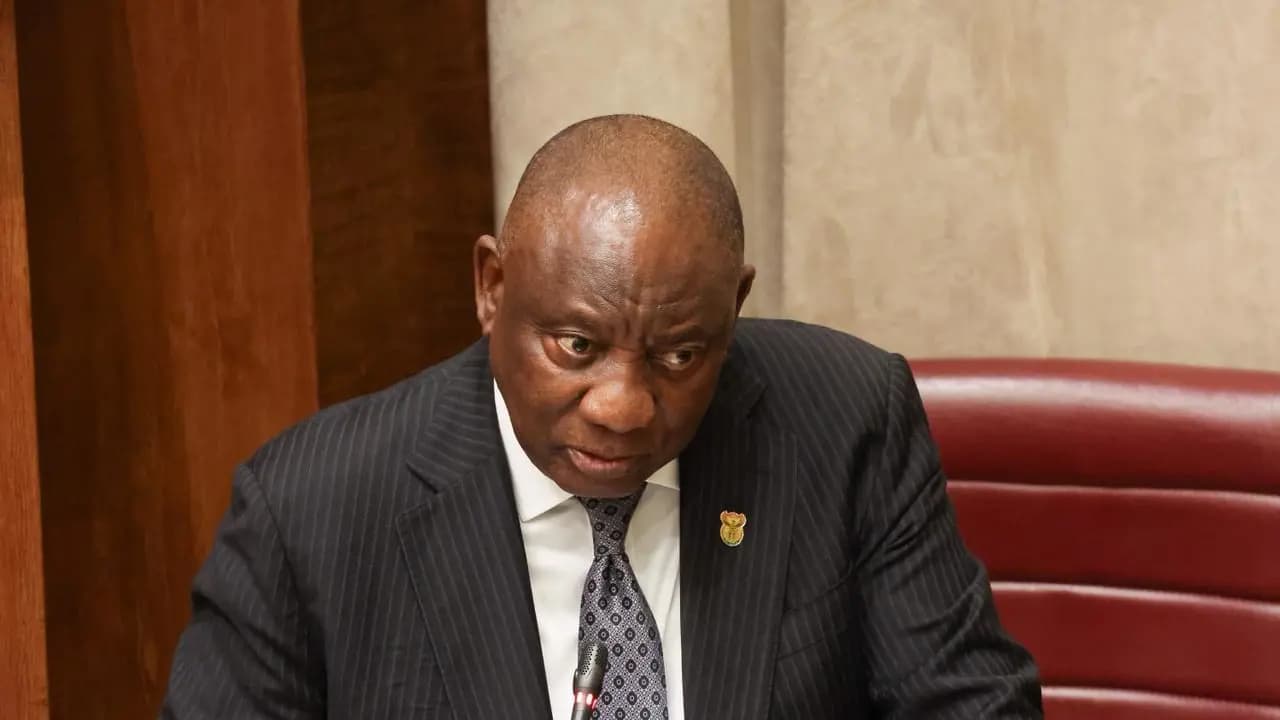
President Cyril Ramaphosa has defended his decision over the NPA appointment of Andy Mothibi as the country’s new head of the National Prosecuting Authority, amid criticism from opposition parties.
Mr Mothibi, who currently leads the Special Investigating Unit (SIU), is due to take up the post of National Director of Public Prosecutions (NDPP) next month. His appointment follows a selection process in which six candidates were interviewed by an advisory panel established by the president.
However, the panel later advised Mr Ramaphosa that none of the shortlisted candidates met the standard required to lead the prosecuting authority. The president subsequently opted to appoint Mr Mothibi, despite him not having been interviewed during the public process.
Speaking on the sidelines of the African National Congress (ANC) birthday celebrations in the North West province on Wednesday, Mr Ramaphosa said the NPA appointment was made in line with the powers granted to him by the Constitution.
“When the advisory panel informed me that none of the candidates were suitable, I had to exercise my constitutional prerogative,” he said. “The public interview process was initiated at my discretion, but it did not yield the results that were expected.”
Opposition parties, including the Economic Freedom Fighters (EFF), have criticised the manner in which the NPA appointment was handled. The EFF questioned why Mr Mothibi was selected despite not being among those interviewed, arguing that the process undermined transparency and accountability.
The party said the public interviews were intended to demonstrate openness in the selection of the country’s top prosecutor and accused the executive of overreach. It described the decision as concerning, though it stopped short of rejecting Mr Mothibi as an individual candidate.
In response, Mr Ramaphosa acknowledged the concerns and suggested that the process could be improved in the future. He said constitutional or legislative amendments might be needed to formalise a more open appointment system.
“In future, we would want the law or the Constitution to be amended to allow for a more open process,” he said. “At present, that framework does not exist.”
Mr Mothibi’s appointment comes at a critical time for the NPA, which has faced years of leadership instability and public scrutiny. Supporters of the decision argue that his experience at the SIU positions him well to restore confidence in the institution.
Despite ongoing debate, the presidency has maintained that the appointment was lawful and necessary to ensure continuity and stability within the justice system.