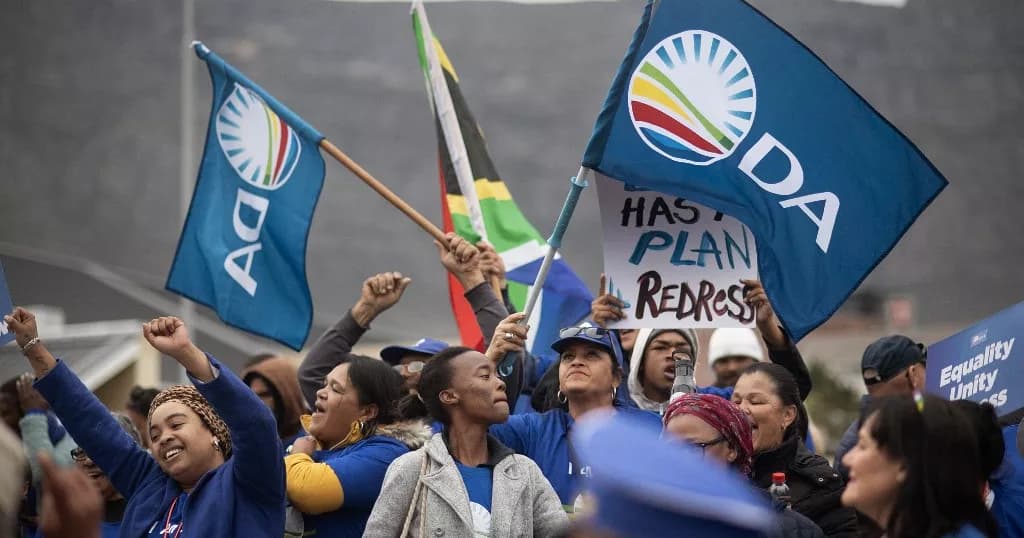
The Democratic Alliance (DA) has raised sharp criticism over what it describes as a costly and deeply troubling trend within the public service, the prolonged suspension of senior government officials. According to the party, the ongoing practice is draining public funds and reveals severe shortcomings in the state’s internal labour systems. The issue has drawn national attention as the keyword DA concerned about prolonged suspension of government officials encapsulates the party’s position on the matter.
The latest example highlighted by the DA involves Unemployment Insurance Fund (UIF) Commissioner Teboho Maruping, who continues to receive full pay more than a year after being placed on suspension. His disciplinary hearing remains unresolved, and the delay was confirmed by Minister of Employment and Labour Nomakhosaza Meth in a written reply to Parliamentary questions submitted by the DA.
Michael Bagraim, the DA’s spokesperson on Employment and Labour, said the situation is far from unique. He argued that government departments are routinely suspending officials for extended periods, sometimes stretching into years, without making progress on disciplinary processes. Throughout these prolonged suspensions, officials remain on full salaries, costing the public purse millions.
Bagraim warned that the pattern reflects a civil service in crisis. He criticised what he described as a culture of inefficiency and poor management, particularly within internal labour relations structures. “It’s furthermore showing up the problems of the civil service in government where employers go ahead and suspend employees for months on end, if not years, on full pay. It is disastrous,” he said.
He added that in many cases, suspensions conclude without meaningful resolution, with some employees returning to work despite lengthy and expensive disciplinary delays. According to Bagraim, this demonstrates either recklessness or an inability by government departments to manage labour processes properly.
The DA maintains that the situation is untenable and continues to emphasise that it remains concerned about prolonged suspension of government officials, urging reform to curb wasteful expenditure and restore accountability in the public service.