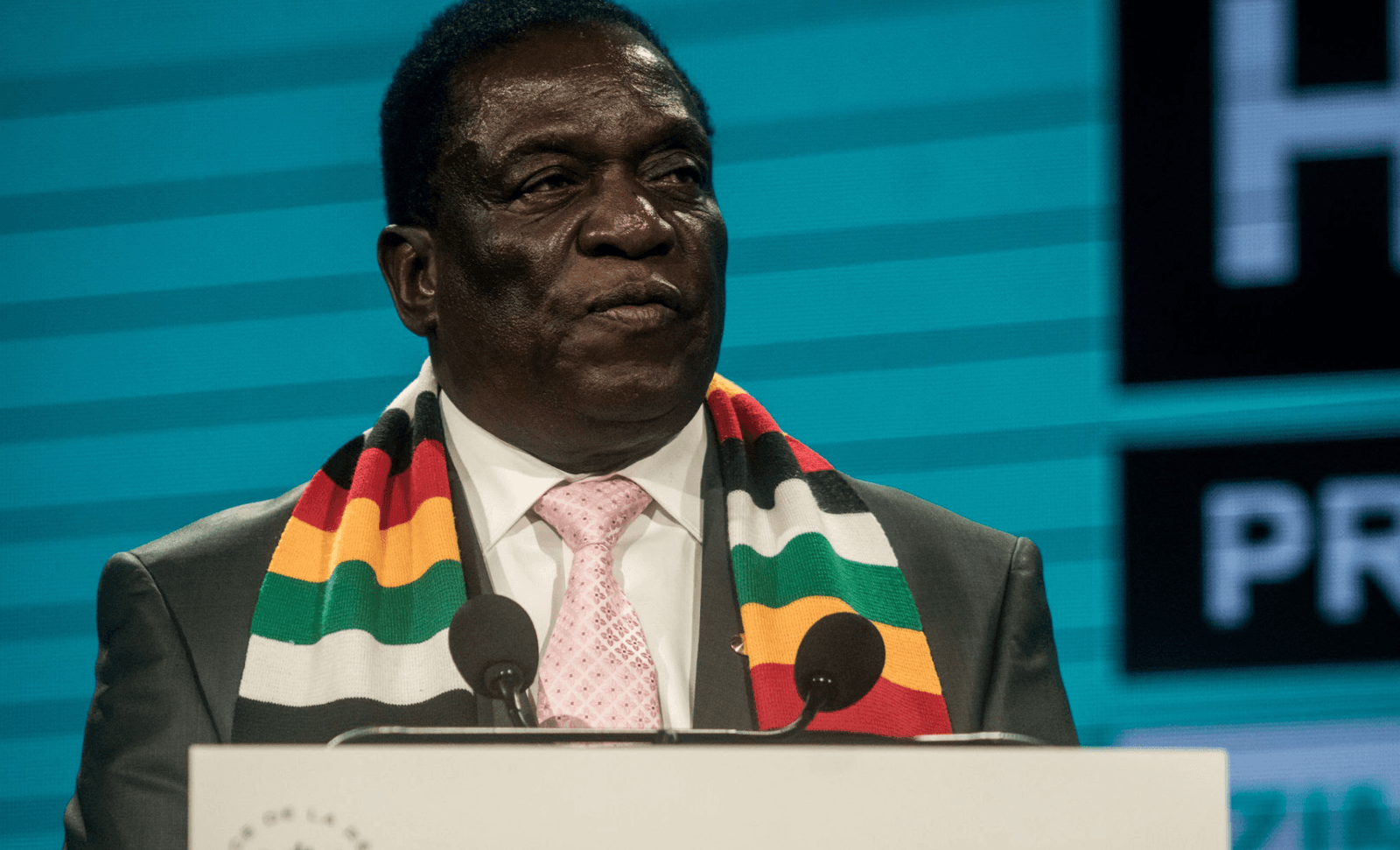
A group of retired Zimbabwean generals and former senior civil servants on Monday accused President Emmerson Mnangagwa of driving a constitutional amendment to extend his rule and alleged that a sanctioned businessman was bankrolling a multimillion-dollar scheme to buy the votes of lawmakers.
The accusations, set out in a statement signed by retired Air Marshal Henry Muchena, mark an escalation of a months-long campaign by former liberation war combatants against the Constitution of Zimbabwe Amendment (No. 3) Bill, known as CAB3.
The bill would extend the terms of the president, parliament and local authorities from five to seven years and replace the direct election of the head of state with a vote by a joint sitting of parliament. Critics say it would prolong Mnangagwa's tenure to 2030, beyond the two-term limit set by the 2013 constitution.
The retired officers, who describe themselves as loyal ZANU-PF members, said Mnangagwa was the principal architect and beneficiary of the bill. They alleged that businessman Kudakwashe Tagwirei was materially funding the process and regarded himself as its secondary beneficiary.
The statement alleged that provincial party chairmen had each been induced with a motor vehicle and $100,000, and that a $31 million budget had been set aside to buy parliamentary votes, at $50,000 per member. Reuters could not independently verify the allegations.
Tagwirei, the founder of Sakunda Holdings and a member of the ZANU-PF Central Committee, is under United States and British sanctions over corruption allegations he has denied. He could not be reached for comment on the statement.
The presidency and the named ministers did not immediately respond to the accusations. There was no immediate comment from ZANU-PF.
The retired officers said they had petitioned parliament on 18 March demanding that the bill be put to a national referendum, and that two meetings with Mnangagwa on 18 and 19 May had failed to resolve the dispute. They said the president had told them 'whoever wins, wins.'
The group said it had warned of the alienation of citizens and of their own ZANU-PF membership.
CAB3 was gazetted on 16 February, triggering a 90-day public consultation period. Parliament received more than 300,000 submissions, many opposing the bill.
The amendment faces several legal challenges. War veterans filed a Constitutional Court application against Mnangagwa and the attorney general on 13 May, arguing the bill cannot lawfully proceed without a referendum under section 328 of the constitution. Further applications followed on 20 May, including one citing parliament, the president and the justice minister as respondents.
Attorney General Virginia Mabhiza has rejected the referendum demand, saying a national vote is required only for amendments to specific entrenched sections of the constitution.
Mnangagwa, 83, has said he will still be in office in 2030. ZANU-PF passed a resolution in October 2024 calling for his term to be extended.