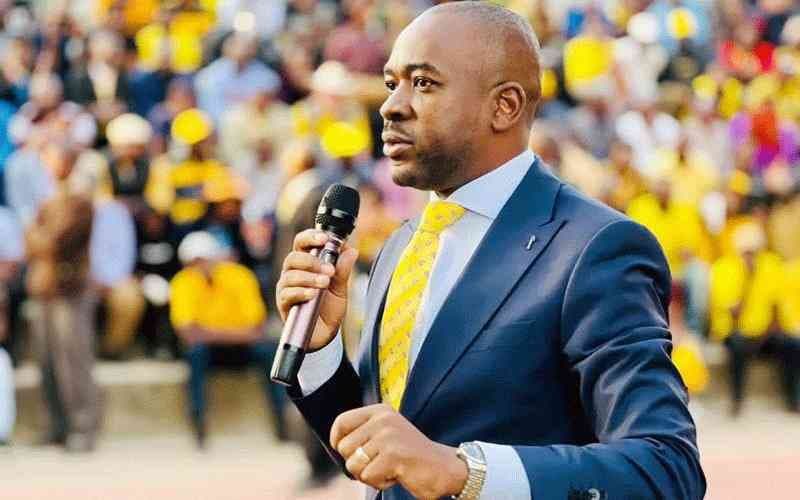
Nelson Chamisa’s return to the political stage is being marketed like a comeback concert: the crowd is expected to roar, the lights to rise, and the old anthem to play as if nothing happened.
But politics is not entertainment. It is not a reunion tour.
It is duty—and duty, once abandoned, does not simply reset because the leader has found his voice again.
What Zimbabwe is witnessing is not merely a politician returning. It is a nation being asked a dangerous question:
Can a leader disappear without explanation… and return expecting the same trust, the same devotion, the same spiritual ownership of people’s hope?
The house he built, the children he left behind
Chamisa walked away from the very “house” he claimed to be building. If infiltration was the issue—and yes, infiltration is real in Zimbabwean politics—then his departure looked less like strategic withdrawal and more like a father leaving home because there was a rat in his room.
A rat is inconvenient.
A family is responsibility.
If infiltration is your reason for quitting, then you have admitted something far more damaging than what your critics say. You have admitted that you were shocked by the normal weather of Zimbabwean opposition politics.
Infiltration is not a surprise. It is the system’s tradition. It is the toolkit.
So what did we learn from his exit?
That when the roof started leaking, he did not repair it. He left.
What’s harder: teaching an eagle to swim, or Chamisa to stay?
Here is the philosophical absurdity of it all:
An eagle does not quit the skies because the wind is harsh.
A fish does not wake up and decide, “I am done swimming.”
But a leader who abandons a movement wants us to accept that politics is something you can pause—then resume—like music.
And this is where Chamisa’s most revealing mistake sits: he speaks about politics as though it is a dance floor.
Zimbabwean politics is not a dance floor. It is a battlefield. It is construction work. It is trench life.
You do not get up to dance only when the DJ plays your song.
A leader who quits abdicates the moral right to demand loyalty
Leadership is not a position. It is a promise.
When you quit without explanation, you don’t just leave your office—you leave people exposed:
the supporters who defended you at cost,
the organisers who carried the ground work,
the ordinary citizens who invested their fragile hope in the project.
You can return, yes—but you return to a different moral landscape.
Because followers don’t forget abandonment. They may clap for you again, but behind the applause will live a permanent question:
Will he quit again?
That question is not cruelty. It is rational self-defence.
Once you have walked away, the people learn a painful lesson: the leader may love the movement, but he loves himself more.
Trust is not a switch
Zimbabweans must reject the lie that trust can be switched off and on.
Trust is not electricity.
Trust is bone. When it breaks, it heals—yes—but it heals differently. It comes back stronger in some places, weaker in others, and it always carries a reminder of its own fracture.
So a leader cannot simply return and say:
“Trust me, I’m back.”
No. A serious leader returns with accountability:
Why did you leave—clearly, honestly, directly?
Who did you consult?
What was the plan for continuity?
What did you learn?
What has changed—structurally—not emotionally?
Why should citizens believe you won’t vanish when the next storm arrives?
Ambiguity: the tool Chamisa misuses
Ambiguity can be strategic when used correctly. Sometimes silence buys time. Sometimes vagueness protects lives. Sometimes public clarity endangers a movement.
But Chamisa does not use ambiguity as a tool—he uses it as a lifestyle.
And habitual ambiguity is political poison.
It turns followers into guessers.
It turns loyalists into interpreters.
It turns a movement into rumours.
A national project cannot be built on mystery, because mystery is not organisation. Mystery is not structure. Mystery is not strategy.
A movement sustained by charisma alone will always collapse the moment the charismatic figure disappears.
And Chamisa has disappeared before.
Zimbabwe’s deeper lesson: stop confusing performance with power
This moment is bigger than Chamisa. It is about Zimbabwe’s repeated addiction to personality politics—where citizens fall in love with symbols and forget to demand institutions.
A dance floor mindset produces:
speeches instead of systems,
slogans instead of structures,
emotions instead of organisation.
But in Zimbabwe, power respects only one language: organisation.
Not vibes.
Not metaphors.
Not popularity.
Organisation.
Closing: if you left once, you must return with truth
Chamisa may be back.
But the struggle is not required to pretend.
A leader who disappeared owes the people clarity—not a rebrand.
Because the people are not props.
They are not an audience.
They are not background dancers in a leader’s storyline.
They are citizens.
And citizens do not owe permanent loyalty to temporary leadership.
So yes—welcome back.
But understand this: the moment you walked away, you taught your followers a truth they will never unlearn.
They may cheer again.
But they will also keep a hand near the exit—
because once you’ve seen a leader leave, you never stop listening for footsteps.
— Brilliant Pongo
Political Analyst & Editor-in-Chief, Report Focus News