It traded muskets for markets, flags for finance, governors for “advisers,” and occupation for “partnership.” Time moves forward, yes. But ideas? Ideas loop. And the oldest political idea is still breathing: conquest—the hunger to control land, routes, resources, and narratives.
We keep telling ourselves the world has evolved. We hold conferences. We sign charters. We chant “people power.” We publish democracy indexes like receipts. Yet under the polished language, the wiring is ancient: the strong take from the weak, and they do it with whatever tool is most effective in that era.
Today, the tool is not always the biggest army. It is the smartest strategy.
The new conquest is not about big boats — it is about who controls the sea lanes
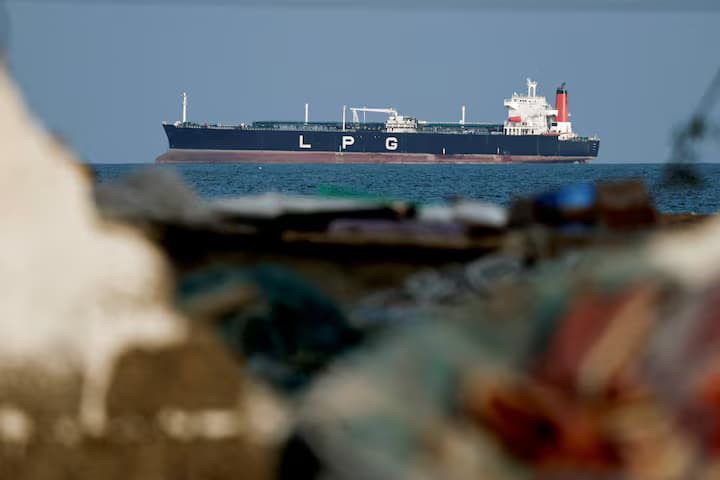
In the old world, empires conquered with ships and cannons. In the modern world, empires conquer with logistics, bases, sanctions, debt, technology, intelligence, and diplomatic vetoes. The boat has changed shape. But the sea is the same: whoever controls the route controls the wealth.
This is why Greenland keeps returning to imperial conversation like a ghost that refuses burial. Greenland is not just ice and scenery; it is geography with teeth—an Arctic hinge between continents, and a strategic perch for missile warning and space surveillance. The U.S. already operates Pituffik Space Base (formerly Thule) under longstanding defense arrangements, because the Arctic is not a postcard—it is a chessboard.
And Greenland’s mineral story is not poetry either: rare earths and “critical raw materials” sit beneath the ice like future leverage.
So when America speaks about Greenland, it is not romance. It is positioning.
Democracy: the sermon we preach, the system we bypass
The myth we sell the public is simple: majority rule, people power, the ballot is the final authority. But the truth is harsher: democracy often operates inside an empire-shaped world. Elections decide who manages the house; they do not always decide who owns the land beneath it.
That is why Russia and Ukraine is not just a war—it is a lecture. A brutal one. Winter does not pause the logic of conquest; it just hardens it. Even now, the war remains defined by attrition, attacks on infrastructure, and competing peace frameworks—proof that power speaks in negotiations only after it has spoken in violence.
And look at the language around “peace.” A ceasefire becomes “not serious” unless it serves the stronger hand’s terms. The world calls it realism. The victim calls it extortion.
Conquest has learned to wear a suit
Modern conquest does not always arrive with tanks. Sometimes it arrives with a contract. Sometimes it arrives with a “loan,” a “security partnership,” a “sanctions framework,” or a “rules-based order” that is applied like sunscreen—thick on friends, thin on interests, invisible when inconvenient.
Venezuela reminds us that resources still attract global appetite, and that economic tools—sanctions, licenses, legal frameworks, lobbying—can be used to shape outcomes without firing a bullet.
This is the modern conquest strategy: control the money, control the trade, control the legitimacy, control the story. And if you can control the story, you can make conquest sound like “stability.”
The liberation paradox: yesterday’s freedom fighters, today’s gatekeepers
Now come home to Africa—the continent that knows conquest not as theory but as inheritance.
Many regimes birthed from liberation struggle carry an internal contradiction: they fought colonialism with the gun, but they are asked to sustain legitimacy through the ballot. And too often, they treat opposition the way colonial administrators treated rebels: as disorder to be eliminated, not competition to be debated.
They will tell you they are “protecting the gains.” And sometimes they are. But the phrase is also a shield—because “gains” can become a private property deed. When a party begins to speak like the state, and the state begins to speak like the party, democracy becomes a costume worn only on election day.
The question Africa must ask—without fear, without poetry, without permission—is this:
Do liberation movements speak the language of the ballot… or do they only understand the gun?
Where we are now: the empire age with democratic makeup
So where are we, really, in this century of hashtags and constitutions?
We are in a world where conquest is still in play—just upgraded.
Where the biggest threat to “people power” is not just rigging at the polling station, but rigging of the global order: the quiet truth that some nations are allowed to take, while others are told to wait their turn and be “civil.”
We are in a world where:
the strong keep options,
the weak keep consequences,
and the public is given slogans while elites negotiate realities.
Time moves.
Ideas loop.
And conquest—old, faithful conquest—keeps finding new disguises.
The tragedy is not that power behaves like power. The tragedy is that we keep acting surprised.
The work of this decade is not to romanticize democracy like a hymn. It is to defend it like a border—with institutions that cannot be bought, citizens who cannot be sedated, and leadership that does not confuse rule with ownership.
Because if you still believe democracy automatically prevails, you are not hopeful.
You are living in utopia—
while empire is living next door, drawing maps.