America Will Not Rescue Uganda — and the Post-Election Script Is Now Playing in Public
When I wrote that America is not coming to rescue Uganda from Museveni, I was not celebrating abandonment. I was diagnosing reality. Great powers do not do charity in foreign policy; they do cost-benefit, risk management, and regional arithmetic. Uganda’s post-election turbulence has simply confirmed what many prefer to treat as pessimism: if you are waiting for a Western cavalry, you will grow old in the waiting room.
Now we have entered the part of the election most regimes fear more than polling day itself: the aftermath — when people start asking, not who won, but whether the winner deserves to rule.
And in Uganda, legitimacy is being managed the way “security” states manage everything: through force, fear, and narrative control.
- Solomon Kampala’s message: when the family becomes the frontline
The statement circulating under Solomon Kampala reads like a young man whose innocence has been mugged by politics. It is not a manifesto. It is a wound speaking.
Look closely: it blends love, anger, grief, patriotism, and vengeance into one emotional cocktail. That is how post-election periods turn combustible—because politics stops being policy and becomes personal trauma with a flag on top.
But this is also the trap: regimes often want the opposition to become emotional and undisciplined, because outrage is easier to paint as rebellion than organised evidence is to dismiss.
A son’s fury can move a nation — but it can also be weaponised to justify the crackdown.
- Bobi Wine “in hiding”: can you lead from the shadows?
Ugandans asking “why run?” are asking the question of a normal country. Uganda right now is behaving like a country where the opposition leader is treated less like a competitor and more like a fugitive.
Reuters reports that Bobi Wine said his wife was hospitalised after soldiers invaded their home, choked and partially undressed her, while he remained in hiding following earlier raids. It also notes he was declared runner-up in the disputed January 15 election and alleges fraud.
So yes—hiding looks weak in the theatre of politics. But hiding can also be a rational decision in the mathematics of survival. If the state’s posture signals detention or worse, visibility becomes a luxury.
Still, leadership from hiding only works if your movement is bigger than your body. That means:
clear delegation (spokesperson, deputy leadership, legal command),
controlled messaging,
a strategic calendar (evidence releases, court filings, diplomatic briefings),
and strict discipline to prevent spontaneous street eruptions becoming the regime’s excuse for mass repression.
“People Power” cannot live permanently as a whisper. But it can survive as a structure.
- The hospital-bed optics: testimony vs “attention seeking”
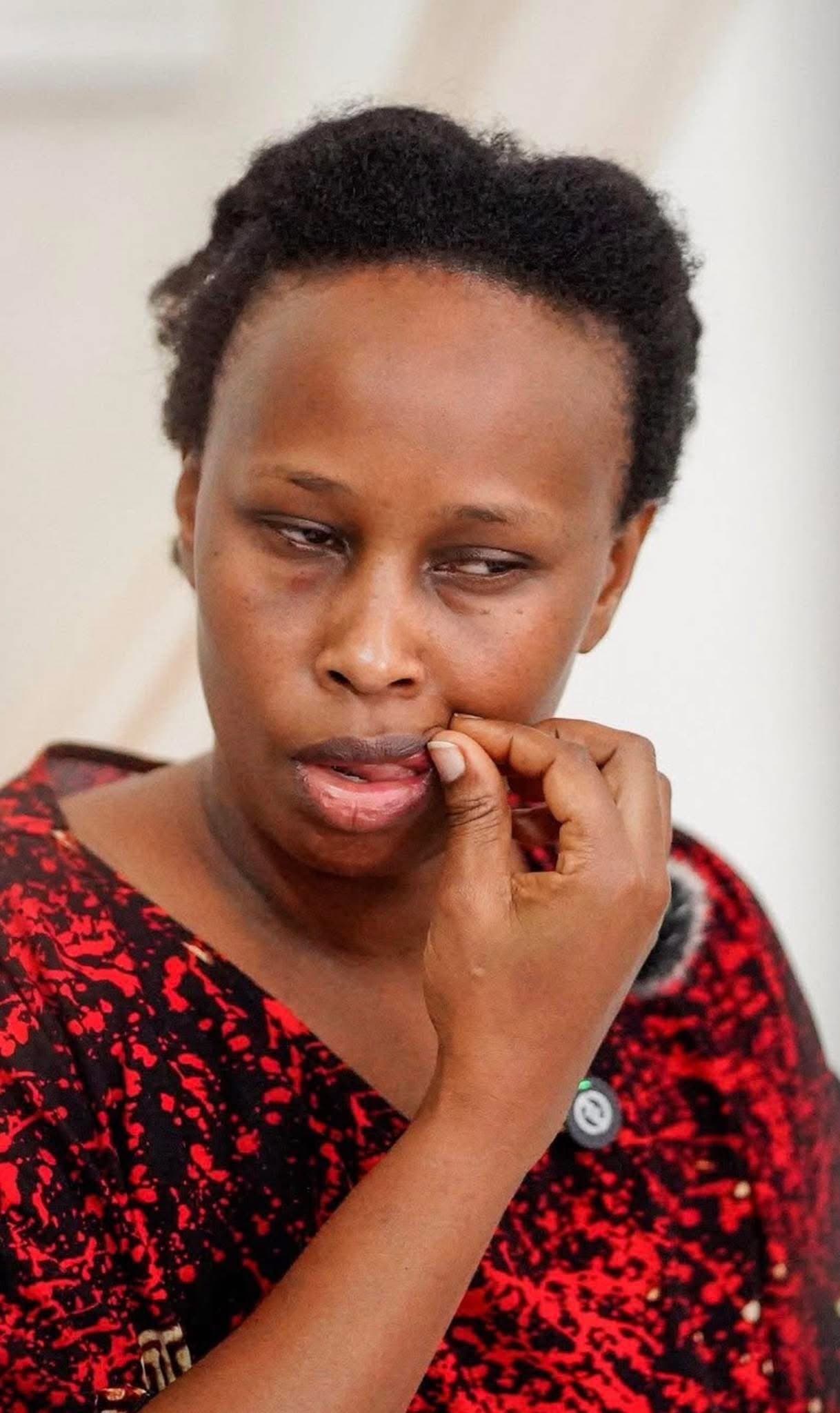
This is where political communication turns savage. When Barbie Kyagulanyi speaks from a hospital bed, she is not merely communicating pain—she is producing a political document: a claim of state violence in human form.
AP reports her account that armed men in military uniform attacked her at home while searching for Bobi Wine, leaving her hospitalised; it also reports her allegation that Muhoozi’s threatening posts contributed to fear, amid reported detentions of supporters.
But in authoritarian politics, even a hospital bed becomes contested territory.
The opposition uses it to say: “This state is coercive.”
The regime’s ecosystem counters: “They are performing.”
The public then splits: one side sees testimony, the other sees theatre. And that is the point: confusion is a tool. When truth is disputed long enough, fatigue replaces outrage.
- Muhoozi Kainerugaba’s threats: treat them seriously because they shape reality
In many African states, the most dangerous speech is not the speech that is true—it is the speech that is permitted.
Reuters reports Muhoozi warning Wine to surrender or be treated as a rebel, and notes claims attributed to him regarding killings and detentions of opposition supporters, alongside concern expressed by the UN Secretary-General over the crackdown.
Even if some of it is intimidation theatre, intimidation theatre from the centre of the security state is not harmless. It signals to:
security forces what mood is authorised,
citizens what risks are acceptable,
and the international community how far Uganda can go without consequence.
And if consequences do not come, the message is received clearly in Kampala: continue.
- Post-election mood: fear in the streets, anger in the heart, exhaustion in the bones
Post-election Uganda feels like a nation held in a tight fist—where people are still counting votes in their minds, but counting risks with their bodies.
The streets may look calm, but calm under threat is not peace. It is compliance. It is survival. And survival politics creates a dangerous quiet: people do not stop believing; they stop speaking.
- International observers: concern is not rescue
This is where my earlier argument returns like a stamp: America will not rescue you. And neither will the world, if the cost is inconvenient.
The EU spokesperson statement notes concerns about an uneven playing field, arbitrary arrests and the internet shutdown, aligning itself with concerns raised by the AU-COMESA-IGAD mission.
The UN Human Rights Office warned ahead of the vote that Uganda’s elections would take place in an environment marked by repression and intimidation against opposition and civic actors.
These statements matter morally. But politically, regimes learn fast: statements without force are background noise.
- What Solomon’s anger really reveals: the generational file is open
Solomon’s message—whether one agrees with every sentence or not—reveals a deeper crisis: the generational breakdown of consent.
When young people start talking like this, it means the state is no longer merely governing; it is raising a generation of opponents. And when the state responds only with force, it does not cure rebellion—it fertilises it.
That is the tragedy: repression wins the week, but it can lose the decade.
Closing thought: Uganda must rescue Uganda
Uganda’s post-election story is not just about Bobi Wine’s hiding, or Barbie’s hospital bed, or Muhoozi’s threats. It is about a state trying to control the only thing it cannot permanently own: the mind of the citizen.
If external rescue is a myth, then the remaining question is uncomfortable but necessary:
Will Uganda build a politics that outlives charisma, outsmarts fear, and organises truth into strategy?
Because the world may watch.
But Uganda must do the work.
— Brilliant Pongo
Political Analyst & Editor-in-Chief, Report Focus News