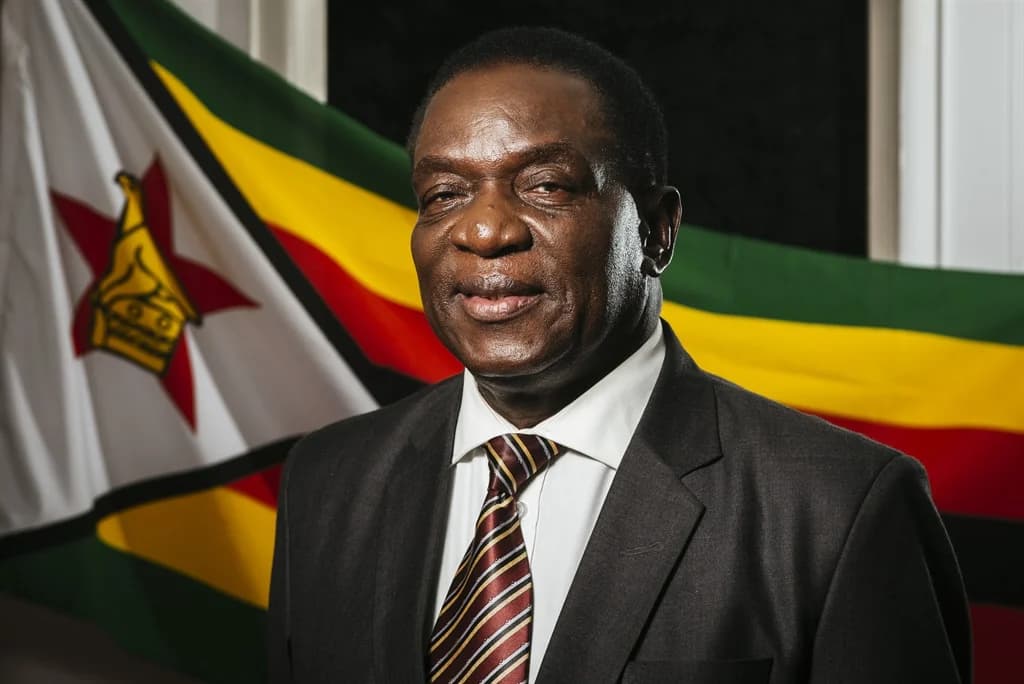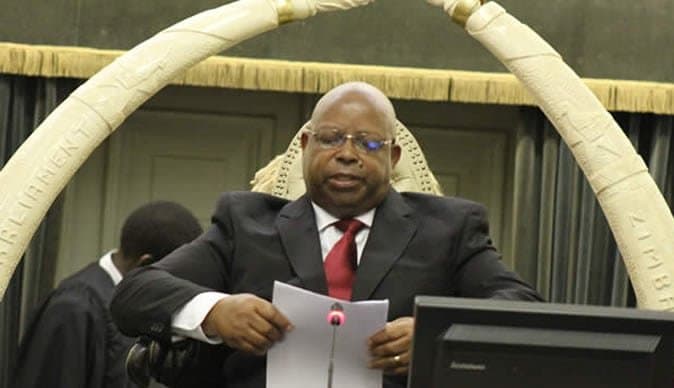
Zimbabwe's parliament speaker gazetted a constitutional amendment bill that would extend President Emmerson Mnangagwa's time in office by two years to 2030, formally launching a 90-day public consultation period before lawmakers vote on the measure.
The Constitution of Zimbabwe Amendment (No. 3) Bill, gazetted by Speaker Jacob Mudenda, would replace the current five-year presidential and parliamentary terms with seven-year terms and abolish direct presidential elections in favour of a parliamentary vote.
The gazetting starts a 90-day window during which parliamentary committees will hold public consultations before the bill is introduced for formal debate in the National Assembly and Senate.
The ruling ZANU-PF party, which holds a two-thirds majority in the lower house and controls the upper house through traditional leaders and allied proxies, has the numbers to pass constitutional amendments without opposition support.
KEY PROVISIONS
The bill proposes that the president be elected by a joint sitting of parliament overseen by the Chief Justice, rather than through direct popular vote. It would also allow the president to appoint 10 additional senators, expanding the upper chamber from 80 to 90 seats.
The legislation would transfer voter registration functions from the Zimbabwe Electoral Commission (ZEC) to the Registrar-General, create a separate Zimbabwe Electoral Delimitation Commission for boundary drawing, and abolish the Zimbabwe Gender Commission and the National Peace and Reconciliation Commission.
The bill would also remove public interview processes for judicial appointments and change the constitutional duty of the Defence Forces from "uphold this Constitution" to acting "in accordance with the Constitution."
OPPOSITION BACKLASH
Opposition figures and constitutional lawyers have denounced the bill, with many arguing the changes require a national referendum under Section 328 of the current constitution.
"The proposed amendments are illegal and unconstitutional in that they infringe the term limit provision of the constitution," opposition lawyer and former finance minister Tendai Biti said, adding that at least two referendums would be required.
Former opposition leader Nelson Chamisa said ZANU-PF had "gone rogue," adding that even former president Robert Mugabe had submitted fundamental constitutional changes to referendums.
Constitutional law professor Lovemore Madhuku of the University of Zimbabwe called the amendments "totally unacceptable," warning that pushing changes through parliament without a referendum would cause political instability.
Justice Minister Ziyambi Ziyambi has said the government does not intend to hold a referendum and will pursue the parliamentary route, a stance opposition groups have vowed to challenge in court.
MDC leader Douglas Mwonzora said the bill attempts to make the incumbent benefit from the term extension, in direct contradiction of existing constitutional protections.
BACKGROUND
Mnangagwa, 83, came to power after the military ousted long-time leader Robert Mugabe in 2017. He won elections in 2018 and 2023, and is constitutionally required to step down in 2028 at the end of his second five-year term.
The bill builds on ZANU-PF's "Resolution No. 1," adopted at the party's conference in Bulawayo, which called for extending Mnangagwa's presidency to 2030 to allow completion of infrastructure projects.
Mnangagwa had repeatedly stated publicly that he would not seek to remain in office beyond 2028, insisting he was a constitutionalist. Cabinet approved the bill's principles on Feb. 10 and it was sent to the speaker for gazetting after review by the Attorney General.
The bill is widely reported to have been drafted by exiled former cabinet minister Jonathan Moyo. Vice President Constantino Chiwenga is reported to be among senior ZANU-PF figures opposed to the amendments, according to local media.
Biti announced he would work with Chamisa and other opposition figures to resist the bill, forming part of a broader coalition that includes the Constitution Defenders Forum, Senator Jameson Timba's Defending the Constitution Platform, and the Zimbabwe National Students Union, which has threatened lawful street protests.
Zimbabwe's 2013 constitution was adopted after years of nationwide consultations and endorsed by more than three million citizens in a referendum.