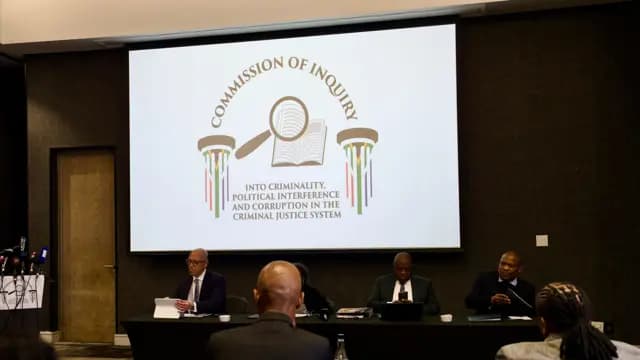
South Africa's judicial inquiry into alleged corruption in police and the criminal justice system will begin hearings on 17 September after procurement delays forced postponement of the original 1 September start date.
The commission confirmed on Friday that contracts for IT equipment and infrastruSouth Africa corruption, police inquiry, criminal justicecture had been awarded to service providers. Commission spokesperson Jeremy Michaels said all work would be "finalised in time for the commission's hearings to commence without any further delays."
The inquiry was established by President Cyril Ramaphosa following allegations made by KwaZulu-Natal Police Commissioner Lieutenant General Nhlanhla Mkhwanazi about an alleged criminal syndicate that has spread influence into law enforcement, the NPA and intelligence services.
Hearings will take place at the Brigitte Mabandla Justice College in Pretoria. The commission must submit an interim report within three months and a final report within six months of starting work.
Justice Minister Mmamoloko Kubayi announced last week that the department had instituted disciplinary proceedings against Director-General Advocate Doc Mashabane and suspended ICT Deputy Director-General Jabu Hlatshwayo over the procurement failures.
"The delay seems to be due to public servants not executing their responsibilities," parliament's justice committee chairperson Xola Nqola told reporters on 26 August.
The commission, headed by retired Constitutional Court Justice Mbuyiseli Madlanga, will investigate whether organized criminal syndicates have infiltrated institutions including the South African Police Service, National Prosecuting Authority, and judiciary.
Mkhwanazi's July allegations mentioned "a syndicate which involves politicians, law enforcement, prosecutors, and the judiciary in Gauteng, which is controlled by a drug cartel."
The original 1 September start was delayed after the justice department failed to procure essential infrastructure including computers and secure internet systems. The commission said procurement commitments made by the department "have not been met."
"I am disappointed like many South Africans," Kubayi said at a press briefing on 26 August. "If this commission is not done and concluded in time, it will continue to have a cloud over our heads."
The commission has authority to summon witnesses for testimony and can refer matters for immediate criminal investigation. It will examine the role of senior law enforcement officials and judiciary members who may have benefited from syndicate operations.
Opposition parties criticized the delay. The Economic Freedom Fighters called it a "deliberate attempt to stifle accountability" while suggesting the government was protecting political allies.
The inquiry's estimated cost is 147.9 million rand ($8.2 million) over six months. It follows previous corruption inquiries including the Zondo Commission which investigated state capture and cost about 1 billion rand.
Service providers are testing ICT hardware and software systems procured through the justice department. Investigators have begun preliminary work including consulting witnesses.