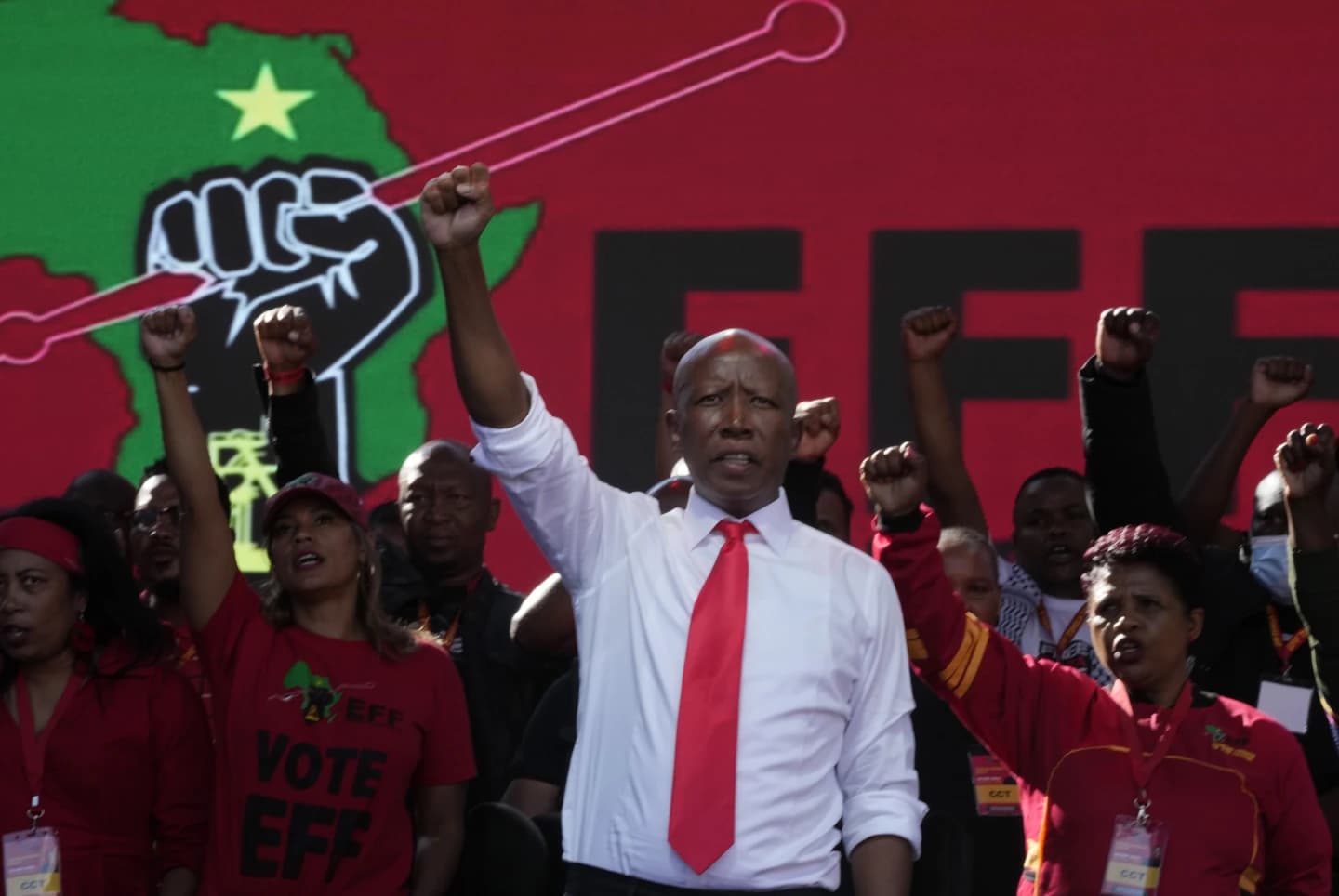
CAPE TOWN, South Africa – The EFF announced it will challenge what it calls "a grave distortion of history, philosophy, and the nature of political speech" after the Equality Court found Julius Malema guilty of hate speech on Wednesday. The party confirmed it has already instructed lawyers to begin preparing an appeal to the Supreme Court of Appeal, framing the case as a broader struggle for political freedom and revolutionary expression.
"We do so not only in defence of our Commander-in-Chief but in defence of political freedom, historical truth, and the right of oppressed people to speak boldly against their oppression," the EFF declared in a statement released hours after the ruling.
The Equality Court judgment, delivered by Judge Mark Sher, found Malema had "demonstrated a clear intention to incite harm and to promote or propagate hatred" during an October 16, 2022 speech at the party's Western Cape assembly. The controversial remarks included telling supporters they "must never be scared to kill" because "a revolution demands that at some point there must be killing."
But the EFF forcefully rejected the court's interpretation, with party spokesperson Sinawo Tambo arguing the judgment strips revolutionary language of its essential political and ideological context. "This interpretation assumes that the reasonable listener is incapable of understanding metaphor, revolutionary rhetoric, or the history of liberation struggles," Tambo said.
The party's defense centers on three key arguments it plans to pursue in its appeal. First, that Malema's remarks were a direct response to the 2020 Brackenfell incident where EFF protesters were attacked by residents. Second, that South Africa's history of structural violence against black people provides crucial context. Third, that as a Marxist-Leninist and Fanonian movement, the EFF's revolutionary discourse must be understood through that ideological lens.
"When Malema spoke of a 'war between white supremacy and black consciousness,' he was referring to an irreconcilable ideological conflict, not a physical one," Tambo insisted. "This is a war of ideas and systems, not an instruction to kill white people."
The EFF warned the ruling sets a dangerous precedent by criminalizing black radical political thought. "To criminalise this language is to criminalise black consciousness and silence any radical critique of white supremacy," the party stated, adding that "the language of revolution cannot be sanitised to comfort the sensitivities of those who continue to enjoy the fruits of colonial dispossession."
The party also criticized the judgment for undermining Section 16 of the Constitution, which protects freedom of expression, particularly political speech. The EFF pointed to previous court rulings, including cases involving the controversial "Kill the Boer" chant, where courts recognized heightened protection for political expression.
"This judgment ignores that principle and instead aligns itself with an agenda that seeks to delegitimise revolutionary discourse," Tambo said, characterizing the ruling as "an attack on the democratic space and the right to articulate revolutionary politics."
The Supreme Court appeal will challenge Judge Sher's finding that Malema's statements constituted "an act of vigilantism and an incitement of the most extreme form of harm possible." The judge had emphasized that when such calls come from the leader of South Africa's fourth-largest political party, they have "the potential to foment racial violence on a large scale."
Both Malema and the EFF were held jointly liable for legal costs after the court found the party "endorsed and supported these statements in the media advisory which it issued and in these proceedings." The case was brought by the South African Human Rights Commission and Dante van Wyk, who testified he received thousands of threatening messages from EFF supporters following the speech.
The EFF's planned appeal comes at a politically sensitive time. Malema was twice denied UK visas this year over his statements, and President Donald Trump highlighted his rhetoric during a May meeting with President Cyril Ramaphosa at the White House.
Despite opposition parties like the Democratic Alliance welcoming the verdict as a victory for constitutional values, the EFF remains defiant. "The real violence is the daily reality of landlessness, unemployment, and racism that black people endure," Tambo declared.
The party's legal team is expected to file formal appeal papers within the prescribed period, setting the stage for what could become a landmark Supreme Court case on the boundaries of political speech in South Africa's democracy. The EFF has signaled it's prepared to take the matter as far as the Constitutional Court if necessary.
"We will not allow the courts to be used as instruments to silence revolutionary voices," the party concluded. "The struggle for economic freedom and racial justice cannot be confined to language that makes oppressors comfortable."