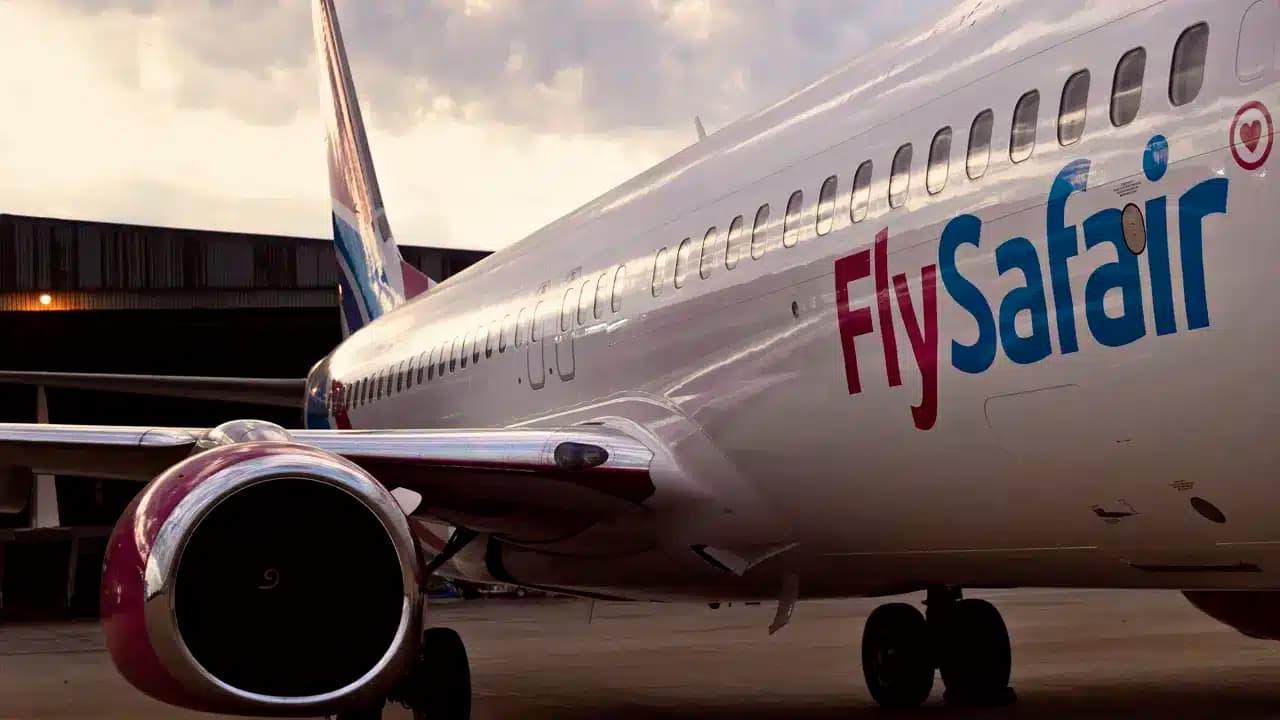
FlySafair customers may need to arrange alternative travel plans for the coming week as wage negotiations between the airline and the trade union Solidarity have reached a deadlock. The low-cost carrier, South Africa’s largest domestic airline, confirmed that talks with pilots, represented by Solidarity, collapsed after three months of discussions.
The airline proposed a 5.7% salary increase, which was rejected by the majority of Solidarity’s members, who represent about two-thirds of FlySafair’s 300 pilots. The union is demanding a 10.5% pay rise for the 2025/2026 financial year, followed by consumer price index (CPI) plus 4.5% for 2026/2027, and CPI plus 4% for 2027/2028.
Solidarity’s Deputy General Secretary, Helgard Cronje, highlighted that the dispute extends beyond salaries. “There’s a dispute about a change in the rostering system, which also remains unresolved, and this has led to a strained relationship prior to the negotiations kicking off,” Cronje said. Pilots have also criticized the airline’s leave and off-day policies, claiming they negatively impact their quality of life and fall short of industry standards.
On Thursday, 17 July 2025, FlySafair and Solidarity will meet under the guidance of the Commission for Conciliation, Mediation and Arbitration (CCMA) to finalize strike rules. Once agreed, Solidarity could issue a 72-hour strike notice, potentially leading to industrial action as early as next week. A separate dispute over the rostering system could trigger additional strikes in the future.
FlySafair has begun rescheduling flights between 22 and 28 July to minimize disruptions. Affected customers will be notified using booking contact details, and the airline has encouraged passengers to check flight statuses via its Manage Booking portal, where changes can be made at no extra cost. “We are fully prepared to manage the situation responsibly, with contingency plans in place to ensure minimal disruption,” said Kirby Gordon, FlySafair’s Chief Marketing Officer.
The airline emphasized its commitment to passenger safety and operational continuity, expressing confidence in reaching a resolution that supports its staff, customers, and business sustainability. However, with separate negotiations with cabin crew also nearing a dispute, the risk of broader operational challenges looms.
Travelers are advised to stay updated on flight statuses, remain flexible with plans, and consider travel insurance covering strike-related delays. The outcome of the CCMA meeting and subsequent actions will likely shape South Africa’s domestic travel landscape in the coming weeks.